Background Information
Blacksmithing or Smithing is the art of creating or repairing things that are made of Wrought Iron or Steel, however other metals can be used in the process. This process normally involves tools such as a Forge, Anvil, Vices, Tongs, Various Hammers, and other tools.
While many people work with metal such as farriers, wheelwrights, and armorers, in former times the blacksmith had a general knowledge of how to make and repair many things, from complex weapons and armor to simple things like nails, horseshoes, or lengths of chain.
Blacksmithing Terms
Forging and Hammering
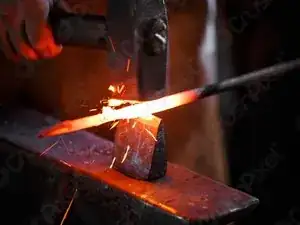
Two of the most essential processes of blacksmithing. Forging metal is the process of heating metal in a forge to hammering and bending it into the desired shape. Often the forging temperatures and hammering process will depend on the type of material that is being worked with, and the item you intend to make
Drawing
Drawing is a process in blacksmithing, where the smith will make the metal longer and thinner. This process often uses a set of tongs to hold the metal down and hammer both sides to extend the length.
Upsetting
In contrast to drawing, upsetting is the process of making your metal thicker, shorter, and narrower. This will require a bit more practice and skill than most blacksmithing techniques, as it is difficult to control. Often smiths will heat a specific part of the metal in the force, rather than heating the entire piece in the forge.
Bending
The process of bending, or curving, a heated piece of metal by hammering it over the horn of the anvil until it has the desired curve. Smiths often strategically heat sections of their metal in their forge before bending it. This same process can be used to unbend their metals by reheating their metal and reversing the steps.
Punching
The process of making holes in hot metal. This is done by softly hammering a punching tool into the spot you intend to make your hole. This needs to be done carefully as hammering too hard can damage your anvil's surface.